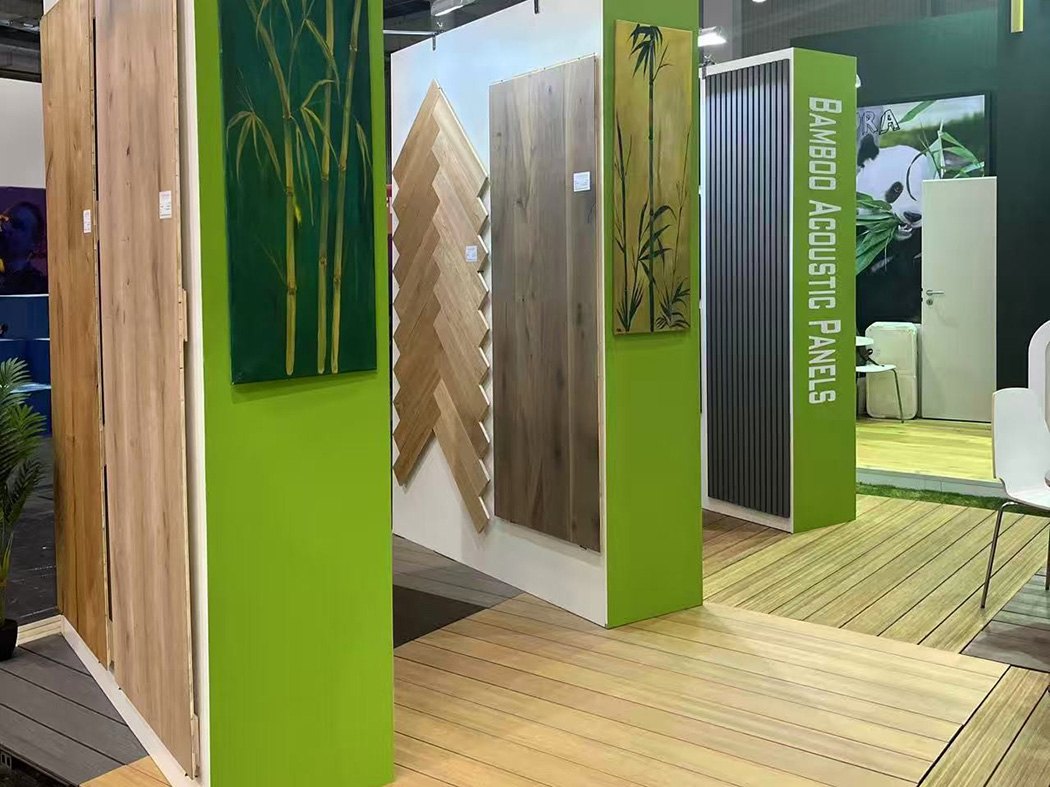
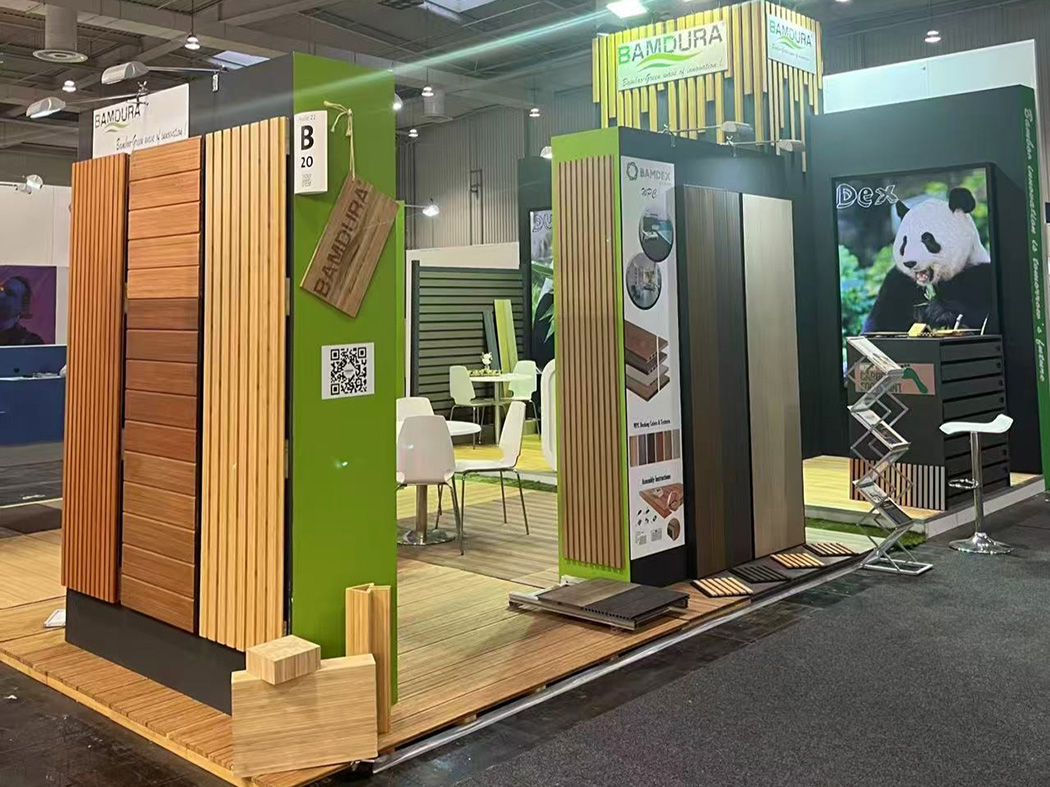
Why Bamboo Wall Cladding is Increasingly Used Indoors
Bamboo wall cladding for interior use is rapidly gaining ground in contemporary construction and interior design projects. Where wood, plaster, and mineral materials were previously the norm, designers and contractors are increasingly choosing bamboo for its combination of aesthetics, performance, and sustainability. Particularly in projects where comfort, appearance, and environmental impact converge, bamboo offers a compelling alternative.
The Growing Demand for Natural Materials in Modern Architecture
Architecture is seeing a clear shift toward biobased and natural materials. Clients are asking for interiors that are not only functional but also contribute to wellbeing and experience. Materials with a warm, natural appearance play a key role in this.
Bamboo fits perfectly into this trend. The material brings calm and texture to interior spaces and combines well with concrete, steel, and glass — making bamboo wall cladding suitable for both minimalist and more expressive design concepts.
Bamboo as an Alternative to Wood and Synthetic Wall Finishes
For construction professionals, bamboo is appealing because it combines many of the advantages of wood with additional technical properties. Compared to traditional timber species, bamboo is dimensionally more stable, less susceptible to warping, and rapidly renewable. Compared to synthetic wall finishes, bamboo offers significantly higher aesthetic and sustainable value.
This makes interior bamboo wall cladding a logical alternative in projects where quality, appearance, and longevity carry significant weight — such as offices, educational institutions, hospitality, and high-end residential construction.
Aesthetic Value of Design Bamboo Wall Cladding
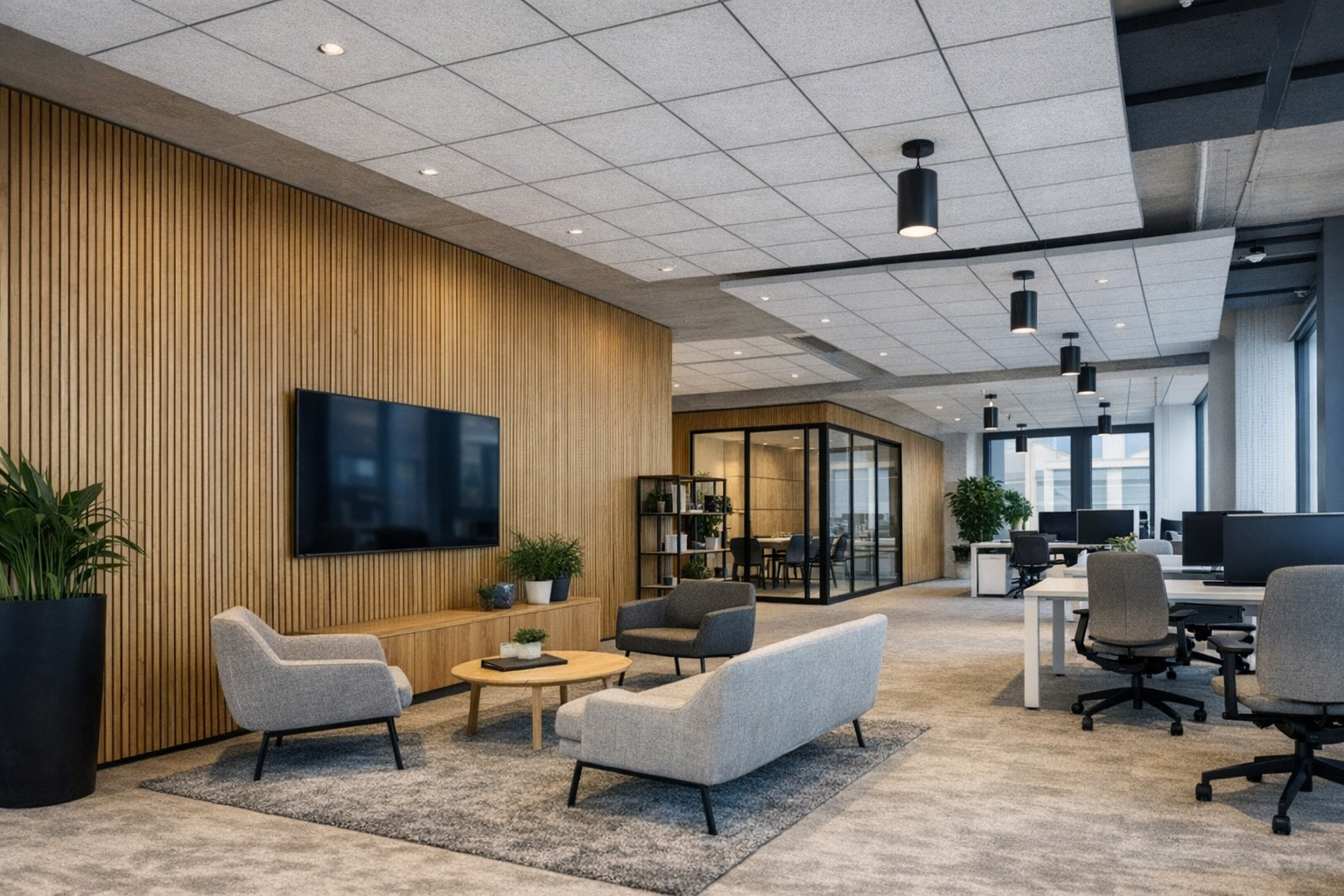
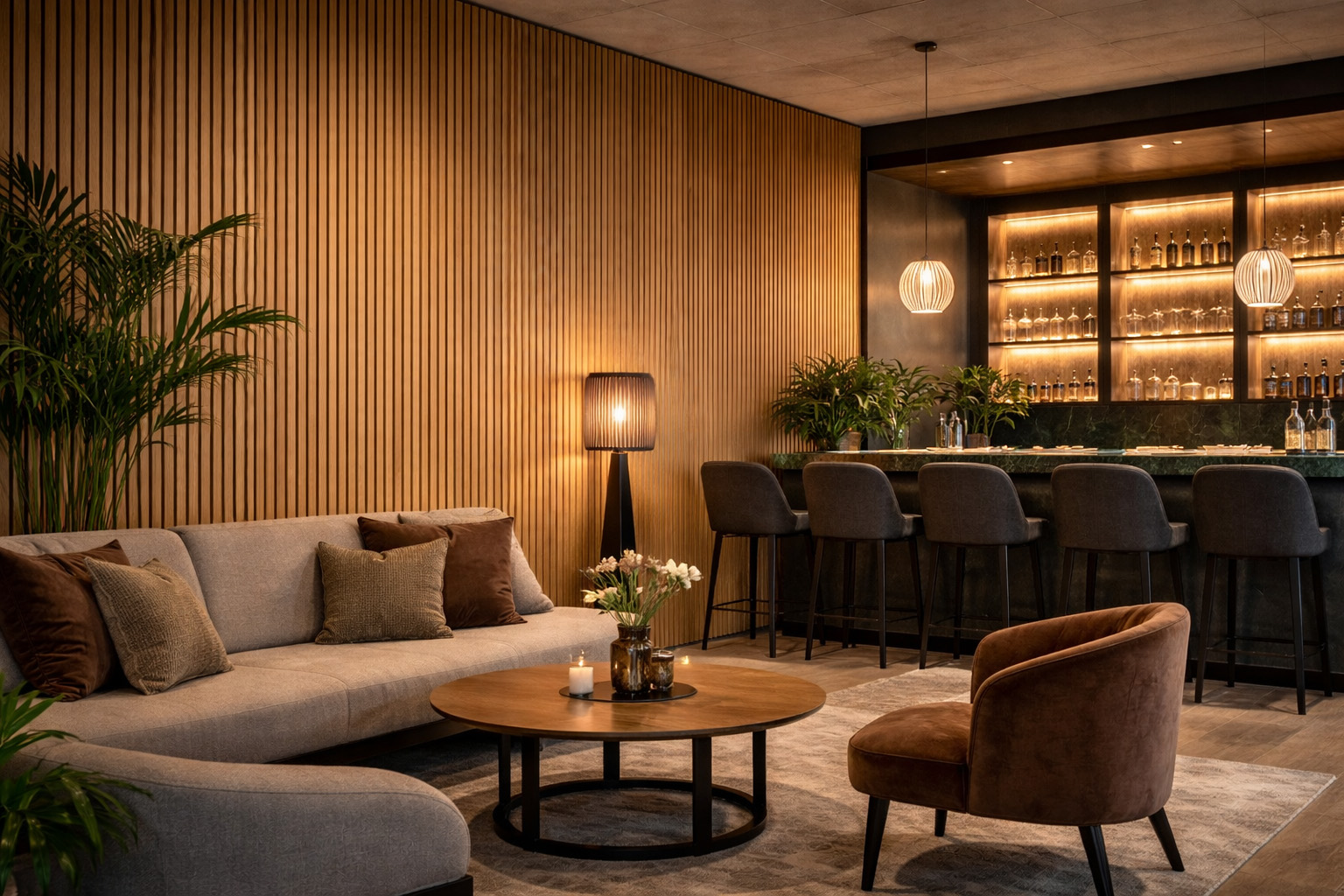
Design bamboo wall cladding gives architects a material that effortlessly combines aesthetics and functionality. The natural grain structure, subtle color tones, and high-quality finish make bamboo suitable for a wide range of interior concepts. The material adds visual depth without becoming dominant, making it well suited for both accent walls and large-scale wall applications.
Within the range of bamboo panels, various finishes and textures are available, ensuring design freedom is maintained.
Clean Lines, Warm Appearance, and Architectural Freedom
Bamboo wall cladding is characterized by a clean, consistent look, making it particularly suitable for modern and minimalist designs. At the same time, its natural origin gives it a warm appearance that contributes to the comfort and experience of a space.
Thanks to various profile shapes, finishes, and installation directions, design bamboo wall cladding offers considerable architectural freedom. Horizontal or vertical lines, continuous walls, or rhythmic patterns bamboo can be applied flexibly across a wide range of design visions.
Applications in Offices, Hospitality, and Public Spaces
In offices, bamboo wall cladding contributes to a professional and pleasant working environment. In hospitality projects such as hotels and restaurants, the material reinforces the atmosphere and identity of the interior. In public spaces including educational and healthcare facilities bamboo is increasingly being used for its combination of appearance, durability, and user comfort.
For architects and contractors, this means that design bamboo wall cladding is not only an aesthetic choice, but also a versatile solution that meets the requirements of various building functions.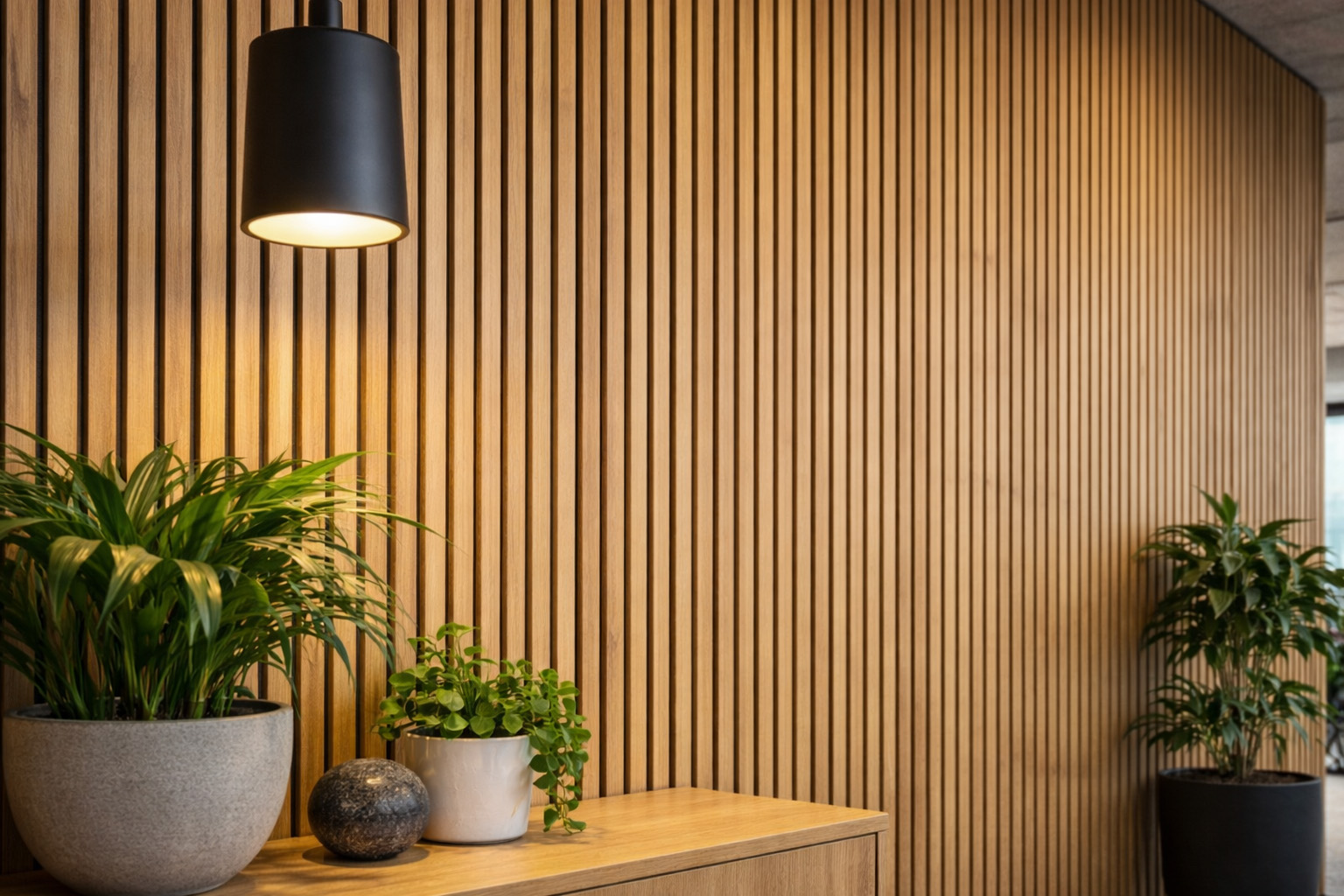
Acoustic Performance of Bamboo Wall Cladding
In modern interior spaces, acoustics play an increasingly important role. Open floor plans, hard materials, and multi-functional use can quickly lead to noise problems. Acoustic bamboo wall panels offer an effective and aesthetic solution. By absorbing rather than reflecting sound, they contribute to a more pleasant and functional indoor environment.
How Acoustic Bamboo Wall Panels Absorb Sound
Acoustic bamboo wall panels are constructed from a combination of bamboo slats and a sound-absorbing backing layer. This structure ensures that sound waves are absorbed and diffused, reducing reverberation. Mid and high frequencies in particular which are critical for speech intelligibility are effectively dampened.
For construction professionals, this is a key advantage: acoustic bamboo wall panels can be used as part of an integrated acoustic design without compromising the visual concept.
Improving Speech Intelligibility and Comfort in Interior Spaces
Good acoustics have a direct impact on the comfort of a space. In offices, this leads to better concentration and reduced fatigue. In meeting rooms, hospitality settings, and educational environments, balanced acoustics improve speech intelligibility and communication.
By combining bamboo wall cladding with acoustic properties, a solution emerges that adds both functional and aesthetic value — making acoustic bamboo wall panels particularly suitable for projects where comfort, performance, and appearance must go hand in hand.
Sustainability as a Functional Advantage
Sustainability is no longer a standalone topic but an integral part of the design and construction process. Bamboo wall cladding fits seamlessly into this development, combining a low environmental impact with technical properties that contribute to the lifespan and performance of a building.
Rapid Growth and Low Environmental Impact of Bamboo
Bamboo is among the fastest-growing plants in the world and can be harvested within just a few years without the plant dying. This makes bamboo a renewable raw material with a significantly lower ecological footprint than traditional hardwood species.
For projects where sustainability must be demonstrably evidenced for example within BREEAM or WELL certification frameworks bamboo wall cladding is an attractive material choice. Its use contributes to responsible material sourcing and aligns with circular design principles.
Long Lifespan and Low-Maintenance Properties
Beyond its origin, the use phase also plays an important role in the overall environmental impact. Bamboo wall cladding stands out for its high density and wear resistance, resulting in a long lifespan. The material retains its shape and appearance, even under intensive use.
In addition, bamboo is relatively low-maintenance, which not only reduces operating costs but also contributes to the long-term sustainability of the building. For construction professionals, this represents a material choice that is both ecologically and economically responsible.
Technical Properties for Professional Applications
Beyond aesthetics, acoustics, and sustainability, the technical reliability of a material is decisive in professional construction projects. Bamboo wall cladding distinguishes itself through consistent performance and broad applicability, in both new construction and renovation.
Stability, Fire Safety, and Workability
Due to its high compression density and layered structure, bamboo has excellent dimensional stability. This limits shrinkage and expansion particularly important for large wall surfaces and precise detailing. For designers and contractors, this means greater design certainty and a predictable end result.
In terms of fire safety, bamboo wall cladding can be supplied with specific fire-retardant treatments in compliance with applicable building regulations. Combined with the right substructure and installation setup, bamboo is suitable for a range of building functions.
Bamboo is also easy to work with. The panels and profiles can be accurately cut, mounted, and integrated into existing building systems, making the material practically applicable within standard construction processes.
Suitable for Renovation and New-Build Projects
Bamboo wall cladding is excellently suited for both renovation and new-build projects. In renovations, it offers a fast way to upgrade existing spaces in terms of appearance and acoustics without requiring major structural modifications. In new construction, bamboo can be incorporated from the design stage as a full-fledged wall finishing material.
Bamboo Wall Cladding in Design and Construction Processes
For a successful application of bamboo wall cladding, good alignment between design, technology, and execution is essential. By integrating bamboo early in the project, aesthetic, acoustic, and sustainability objectives can be optimally combined.
Integration into Holistic Acoustic and Aesthetic Concepts
Bamboo wall cladding works best as part of a comprehensive concept in which material selection, acoustics, and spatial experience are aligned. By combining bamboo with other absorbing or reflecting materials, reverberation time and acoustic comfort can be precisely managed without compromising the design.
Collaboration Between Architect, Contractor, and Supplier
Close collaboration between architect, contractor, and supplier is crucial when applying bamboo wall cladding. By involving expertise early, a more efficient construction process and a high-quality end result are achieved.
Conclusion: Bamboo Wall Cladding as a Smart Choice for Interior Spaces
Bamboo wall cladding offers a well-considered combination of aesthetics, acoustic performance, and sustainability. For architects and construction professionals, it represents a versatile solution that responds to current demands in modern construction and interior design. Its natural appearance, combined with technical reliability and acoustic comfort, makes bamboo suitable for a wide range of applications in offices, hospitality, and public buildings.
By incorporating design bamboo wall cladding and acoustic bamboo wall panels into the design and construction process, an integrated concept emerges in which functionality and experience reinforce each other while bamboo contributes to responsible material use and a long lifespan for interior spaces.