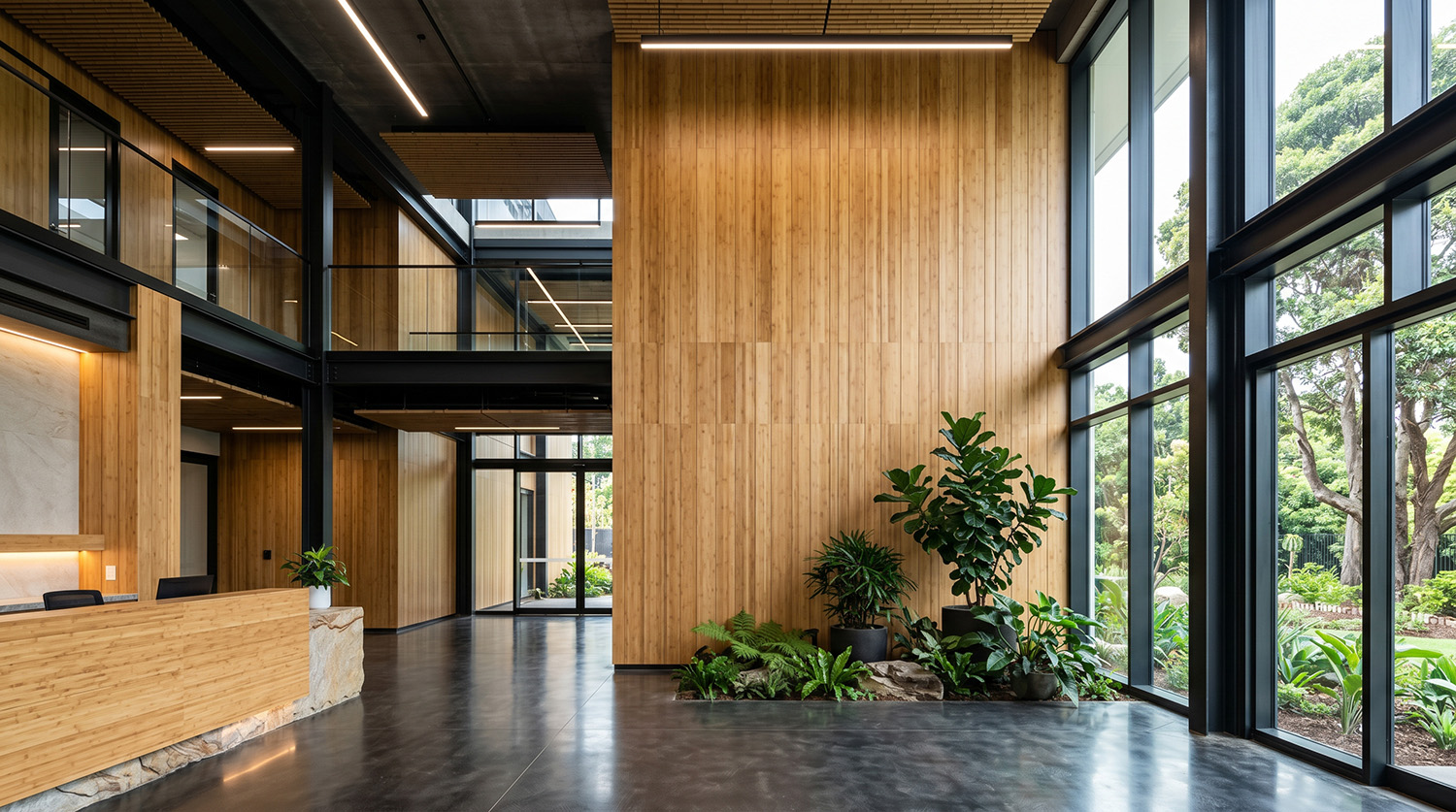
The construction sector faces a major challenge. Drastically reducing CO₂ emissions is no longer just an ambition; it is a necessity. Where sustainability used to be a preference, it is now a strict requirement driven by legislation, clients, and certifications such as BREEAM and WELL. For architects, contractors, and project developers, this means every choice influences the total impact of a project.
One of the most decisive factors is the choice of building materials. By consciously selecting materials with a low environmental impact, the CO₂ emissions of a building can be significantly reduced. In this article, you will read how material choice directly contributes to CO₂ reduction and why biobased materials, such as bamboo, are becoming increasingly important.
Why CO₂ reduction is becoming increasingly important in construction
The construction sector is responsible for a large share of global CO₂ emissions — not only due to energy consumption during a building’s use, but primarily due to the production and processing of construction materials.
Governments are setting increasingly stringent requirements for sustainability and carbon reduction. At the same time, clients are demanding transparency and demonstrable performance. As a result, the focus is shifting from energy-efficient building to a broader approach that considers the entire life cycle of a building. This forces construction professionals to adopt CO₂ performance as a fundamental starting point in both design and execution.
The largest sources of CO₂ emissions in construction projects
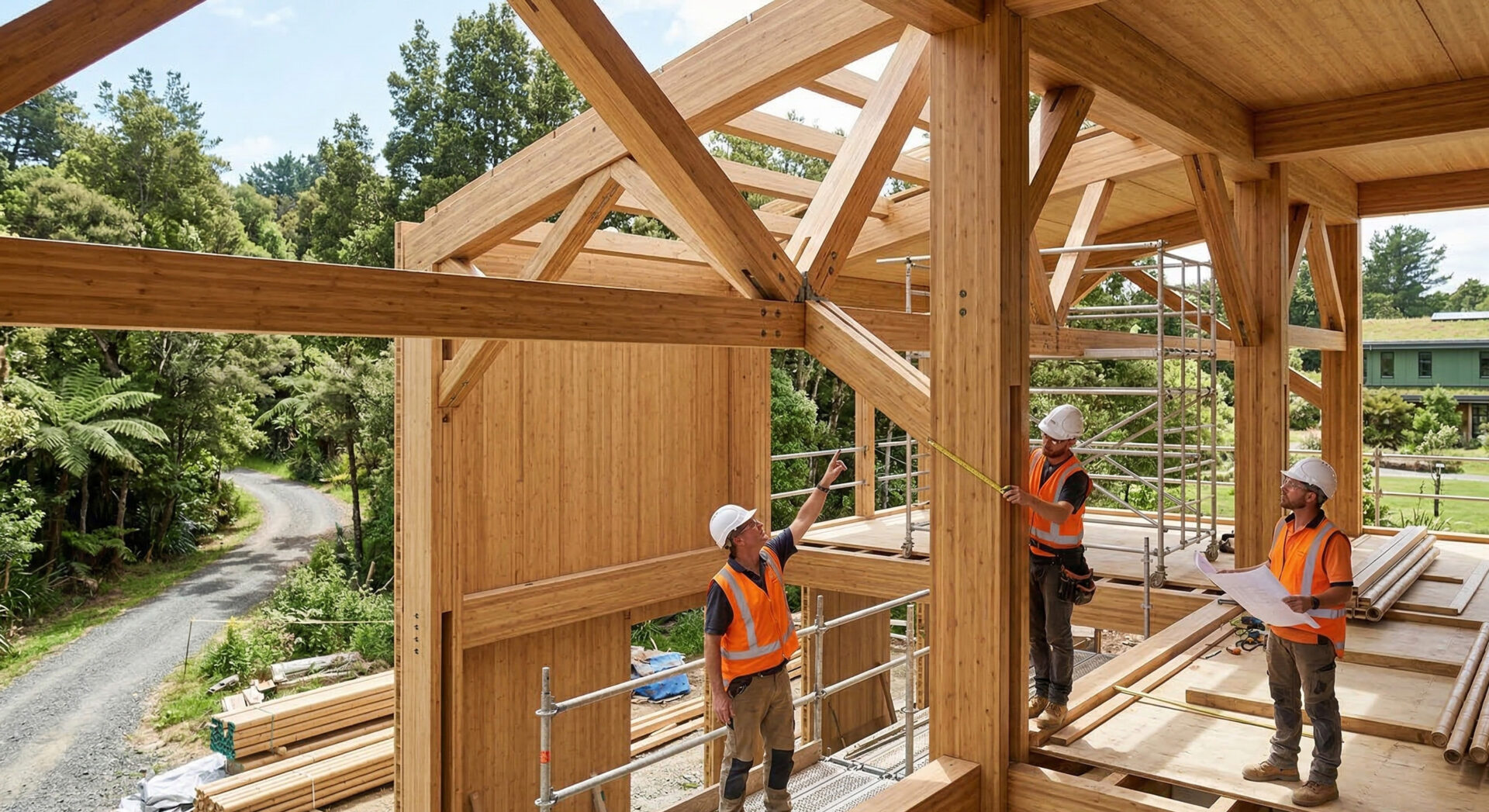
To lower emissions, insight into the primary sources is required. In most construction projects, CO₂ emissions stem from the production of materials such as concrete and steel. Transport, on-site construction activities, and maintenance throughout the lifespan also play a role.
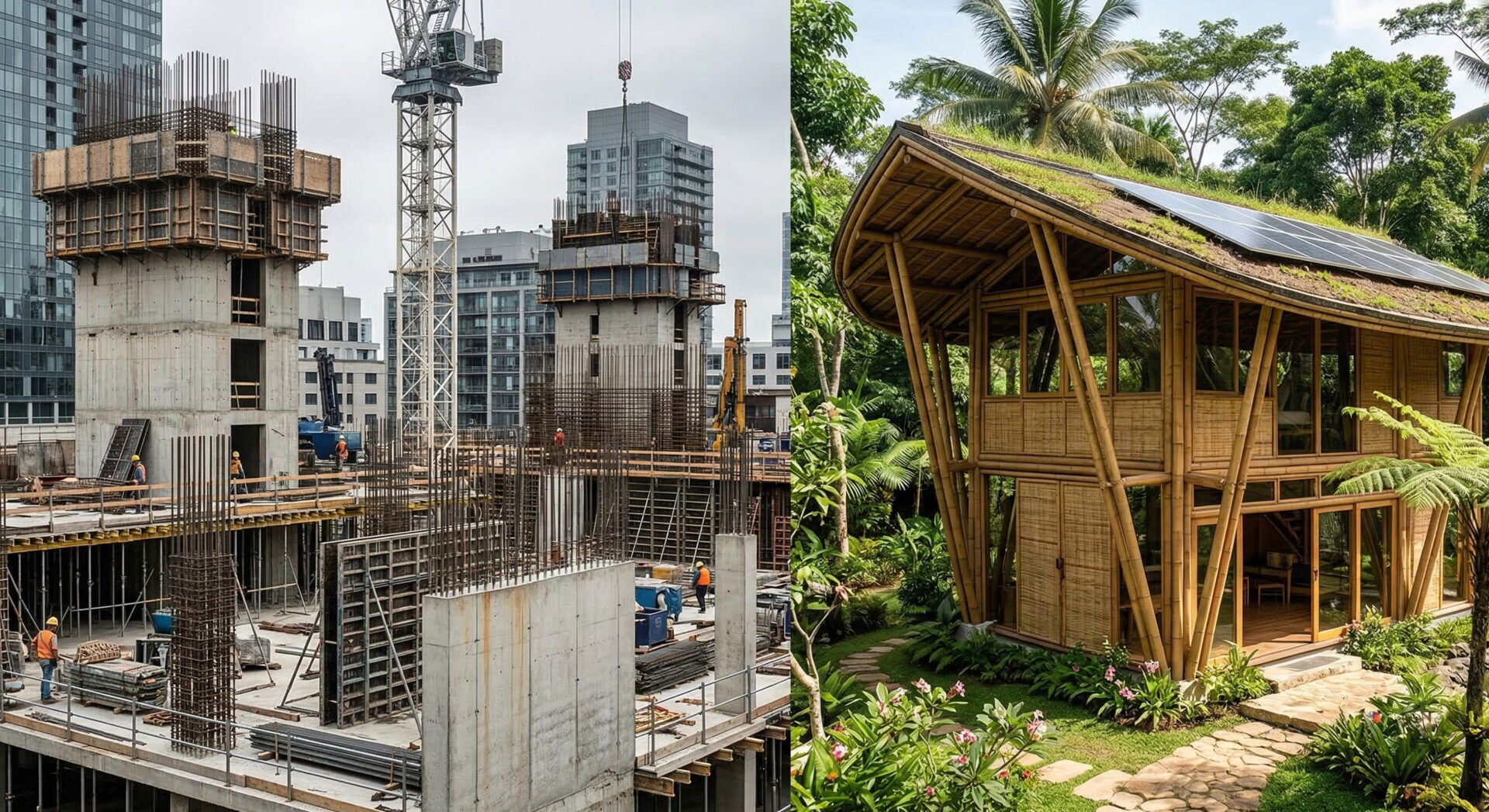
Traditional materials in particular have a high impact because their production requires a great deal of energy. This makes material choice one of the most effective levers for reducing CO₂ emissions and a thoughtful approach here is essential for lowering the carbon impact of any construction project.
Traditional materials versus biobased alternatives
Traditional materials are strong and reliable but often carry a high environmental burden. Biobased materials, such as wood and bamboo, offer a sustainable alternative. They are renewable, store CO₂ during growth, and require less energy during production — actively contributing to lowering a building’s carbon footprint.
Why bamboo is a smart choice
Bamboo stands out through its rapid growth and high density. The plant can be harvested within a few years while simultaneously absorbing CO₂ from the atmosphere. That captured CO₂ remains stored in the final product, making bamboo not only a sustainable material but a direct contributor to carbon
reduction in construction projects. For more information about the impact and calculations, visit our page on the CO₂ footprint of bamboo.
Practical ways to reduce CO₂ in projects
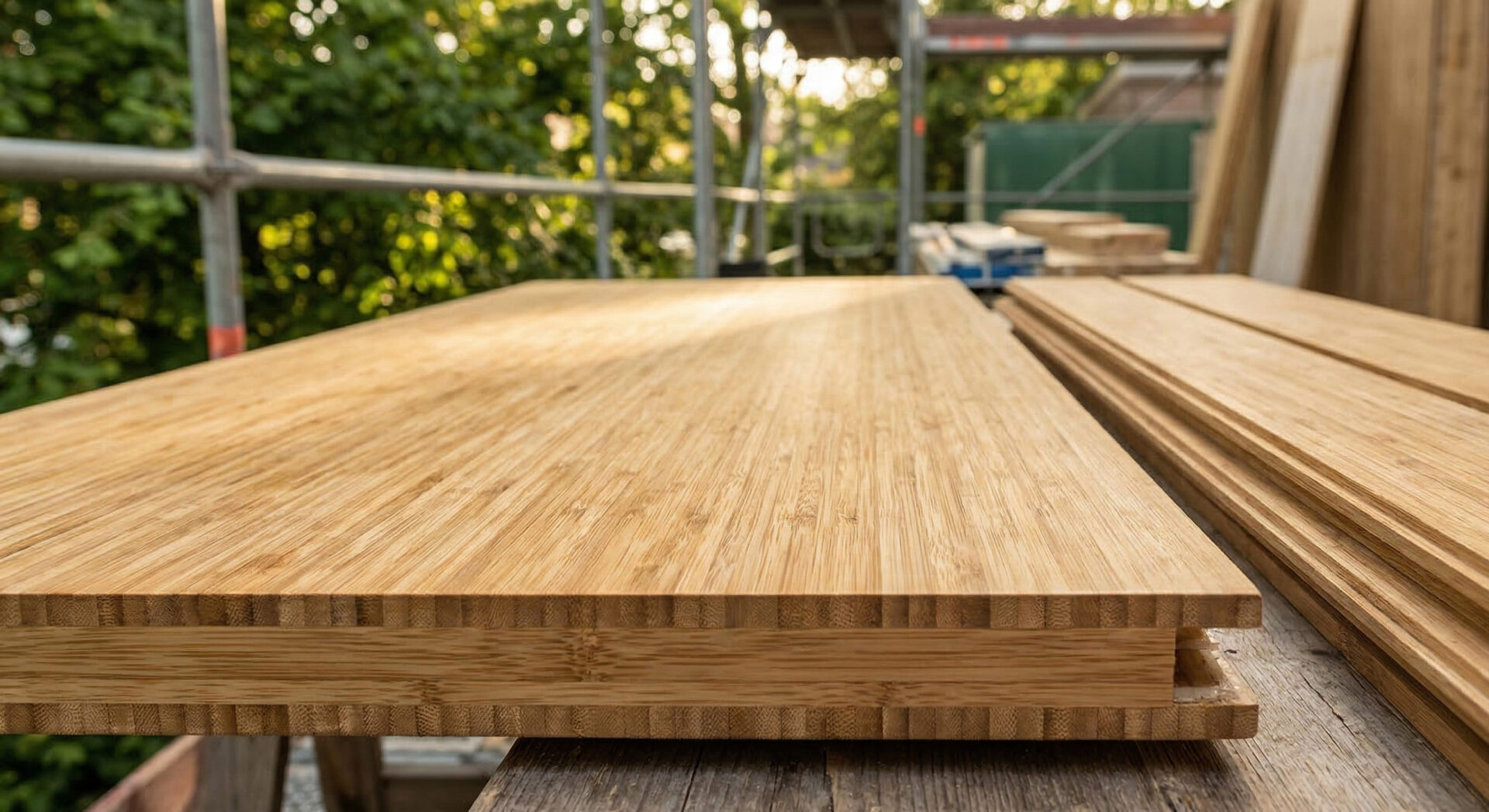
In addition to material choice, several measures can lower the emissions of a construction project. In practice, these reinforce each other
Choosing biobased materials
Replacing traditional materials with biobased alternatives is an effective step. Materials like bamboo combine sustainability with technical performance and are widely applicable.
Efficient design and construction
Smart design prevents unnecessary material use, saving not only CO₂ but also time and costs.
Lifespan and maintenance
Materials with a long lifespan require fewer replacements, reducing total environmental impact over the life cycle.
Bamboo performs well here thanks to its wear resistance and dimensional stability.
Carbon reduction matters to every party in the construction chain:
Carbon reduction matters to every party in the construction chain:
- Architects shape material choice and design, determining a large part of a building’s environmental performance.
- Contractors need solutions that are both practically feasible and sustainable.
- Project developers must comply with regulations while responding to growing demand for sustainable buildings.
For all these parties, sustainability is rapidly becoming a deciding factor — not just ethically, but commercially.
Conclusion: steering for CO₂ performance starts with material choice
Reducing CO₂ emissions begins with conscious choices, and material selection plays a central role. By opting for biobased solutions like bamboo, the impact of a project can be significantly reduced without compromising on quality or performance.
In a sector where sustainability is becoming paramount, this offers a real opportunity to make projects future-proof and meet the demands of tomorrow.
Want more insight into how bamboo contributes to CO₂ reduction? Visit our page on the CO₂ footprint of bamboo or reach out via our contact page.