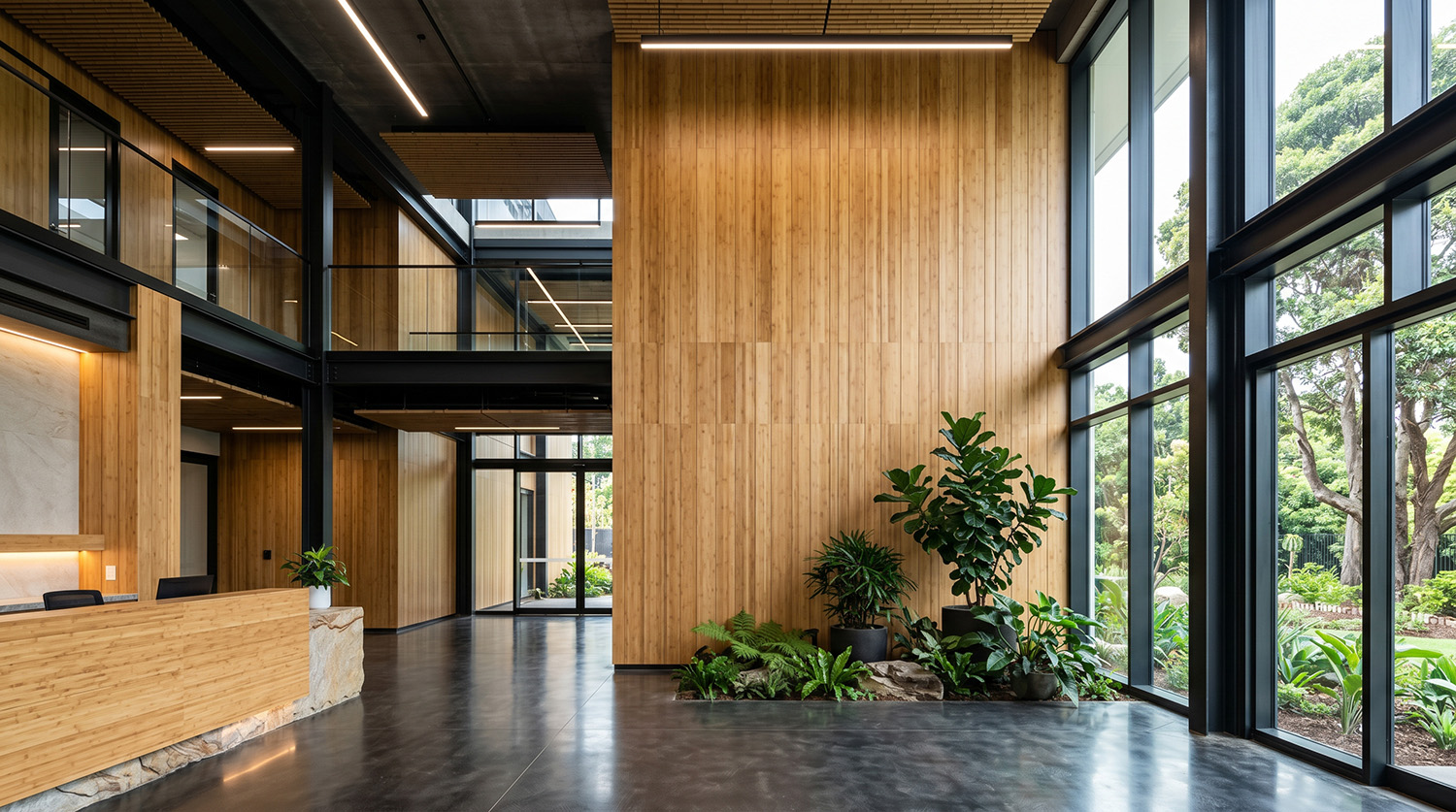
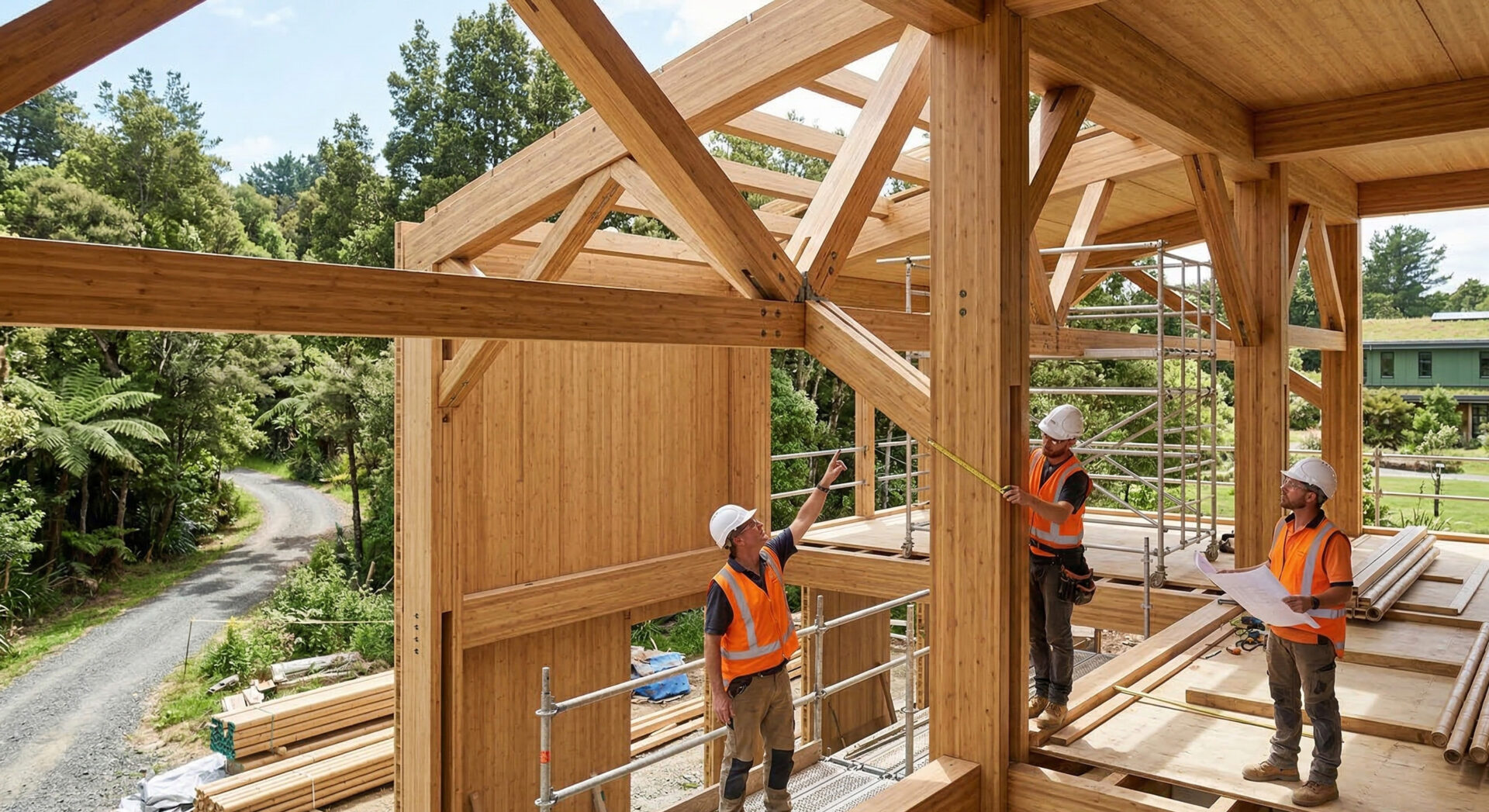
Bamboo wall cladding is becoming increasingly popular in professional construction projects, ranging from office interiors and hospitality venues to residential developments. If you are an architect, contractor, or interior designer considering bamboo for your next project, understanding the available profiles, applications, and installation methods is essential. In this article, we discuss the key considerations when selecting the right bamboo wall cladding for your project.
Why choose bamboo wall cladding?
Over the past decade, bamboo has established itself as a premium construction material. Its popularity is driven not only by its natural appearance but also by its impressive technical performance compared to traditional timber and composite alternatives.
Laminated bamboo offers an exceptional strength-to-weight ratio. During the high-pressure lamination process, bamboo fibres are compressed into an extremely stable material that is harder than many hardwood species while maintaining excellent dimensional stability. For wall applications, this means a durable product that requires very little maintenance when installed correctly.
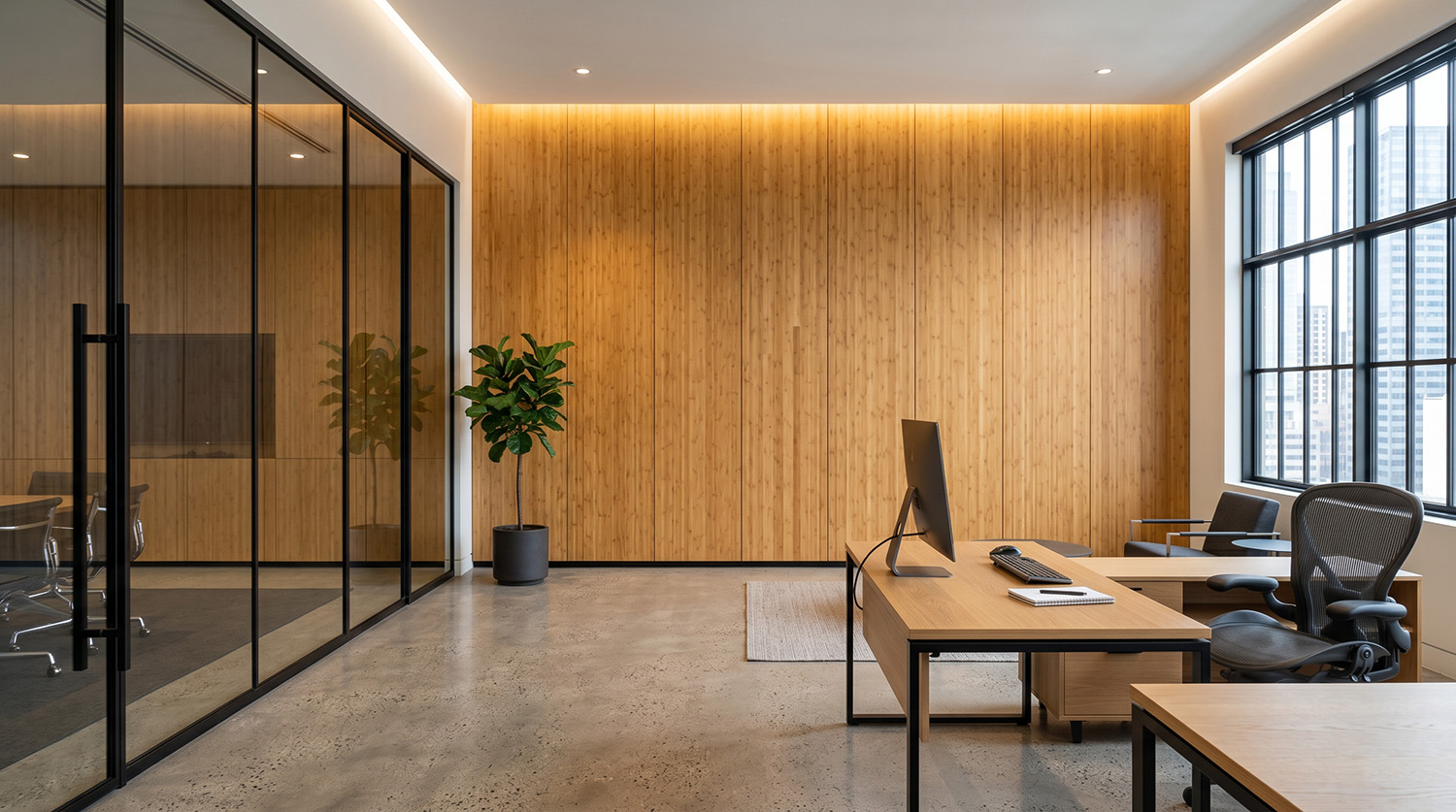
Visually, bamboo creates a warm and natural atmosphere that combines beautifully with concrete, steel, and glass. Architects frequently specify bamboo in projects where they want to soften industrial materials with natural textures, making it particularly suitable for office buildings, hotel lobbies, retail environments, and high-end residential interiors.
Another significant advantage is sustainability. Bamboo reaches maturity within just three to five years, making it one of the fastest renewable building materials available today. As demand for bio-based construction materials continues to grow, bamboo provides an environmentally responsible alternative to traditional hardwood.
Indoor or outdoor bamboo wall cladding: what’s the difference?
Not every bamboo wall cladding system is suitable for every environment. Whether the cladding will be installed indoors or outdoors largely determines the profile, finish, and installation method required.
For indoor applications, aesthetics and acoustic performance are often the primary considerations. Solid bamboo wall panels and decorative slats are commonly used to create warm, contemporary interiors. They are available in a wide range of finishes, from natural bamboo to carbonised colours, allowing seamless integration into modern architectural designs. In humid environments such as kitchens and bathrooms, moisture-resistant finishes are recommended.
Outdoor applications place much higher demands on the material. Exterior bamboo wall cladding must withstand UV exposure, rain, frost, and temperature fluctuations. Thermally modified or specially treated bamboo performs significantly better under these conditions. Always select products specifically designed for outdoor use and ensure that the installation includes adequate rear ventilation to prevent moisture build-up behind the cladding.
Bamboo wall cladding profiles: choosing the right solution
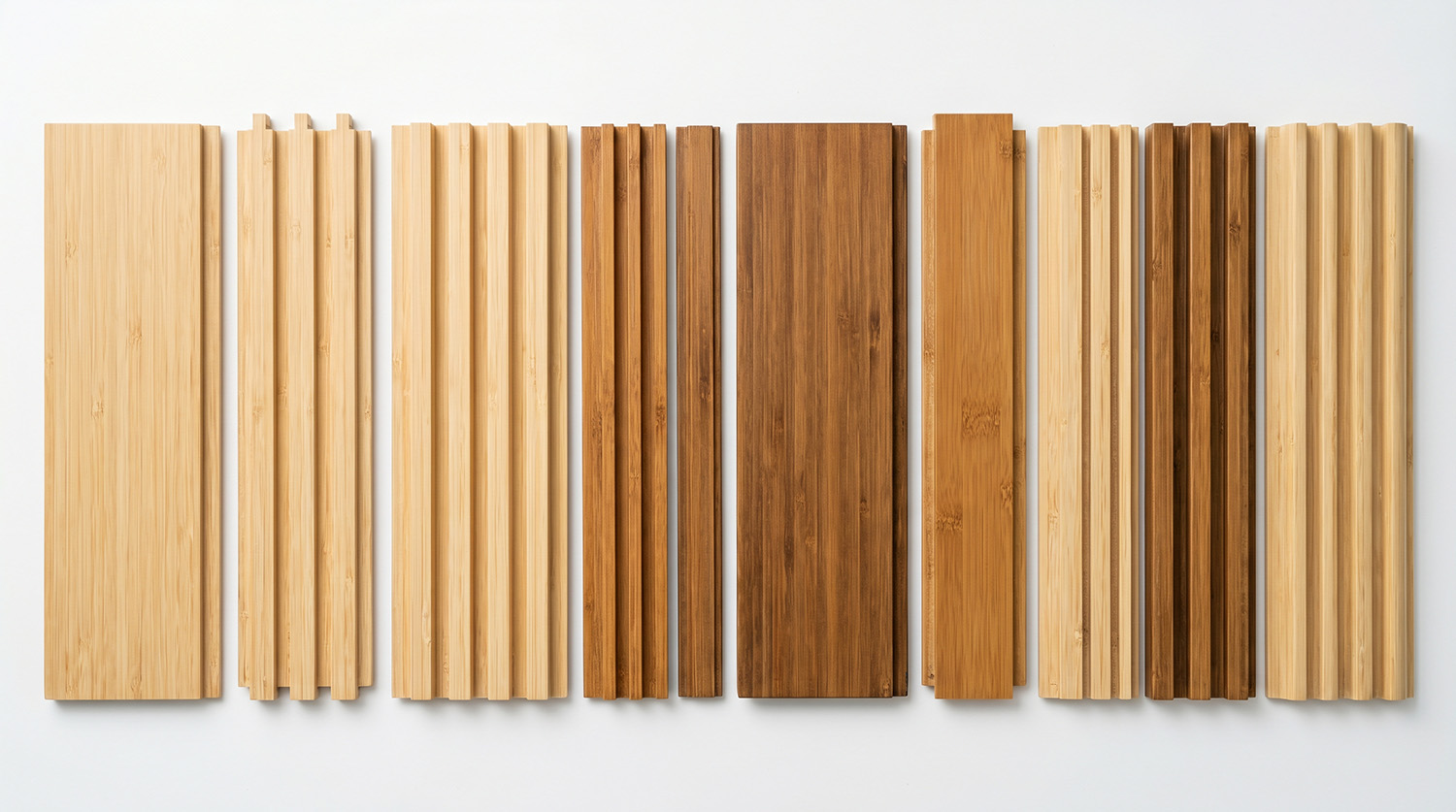
The Bamdura collection includes several bamboo wall cladding profiles, each developed for specific architectural applications. Understanding these profiles helps professionals select the most suitable solution for every project.
Solid bamboo panels (PA Series)
Solid bamboo panels, available in thicknesses from 15 mm to 50 mm, are ideal where structural thickness or additional rigidity is required. These panels are available in cross-laminated and multifunctional constructions and are frequently used for both decorative wall finishes and acoustic wall systems.
Explore the complete range of bamboo panels to find the right solution for your project.
Wall cladding profiles (WS-01, WC-01 and WPI-01)
The WS-01 and WC-01 profiles have been specifically designed for wall cladding applications. Their tongue-and-groove connection allows for fast, precise installation while creating a seamless appearance.
The WPI-01 profile is intended exclusively for indoor applications and provides a refined finish suitable for offices, hotels, restaurants, and other premium interiors.
Discover the complete collection on the Bamdura Bamboo Wall Cladding product page.
Decorative bamboo slats (PL-01 and PL-02)
The PL-01 and PL-02 decorative slats create elegant feature walls with depth and texture. They are particularly popular in hospitality projects and office interiors where atmosphere and brand identity play an important role.
If acoustic performance is also required, consider combining these slats with Bamdura Acoustic Bamboo Panels.
Sustainability: bamboo as a bio-based building material
Bamboo is increasingly recognised as one of the leading bio-based building materials. Research has shown that laminated bamboo has a relatively low carbon footprint throughout its life cycle. During its rapid growth, bamboo absorbs and stores significant amounts of CO₂, making it an attractive material for sustainable construction projects and green building certifications such as LEED and BREEAM.
At Bamdura, sustainability begins at the source. By maintaining control over the entire supply chain—from bamboo forest to finished product—we ensure consistent quality, full traceability, and responsible sourcing. This approach provides architects, contractors, and developers with confidence that the materials meet both environmental and quality standards.
For more information about bamboo as a sustainable construction material, consult the Bio Bouw Gids, which offers valuable insights into the application of bio-based materials within the Dutch construction industry.
Installation tips for bamboo wall cladding
Bamboo wall panels and wall profiles can be installed using either high-quality construction adhesive or mechanical fasteners such as screws. For most indoor applications, adhesive installation is recommended because it creates a seamless finish without visible fixings while reducing the risk of cracking.
For the best long-term performance, keep the following recommendations in mind:
- Allow the bamboo to acclimatise in the installation area for at least 48 hours before installation.
- Ensure the substrate is flat, clean and completely dry.
- Bamboo is more sensitive to moisture from the substrate than to fluctuations in ambient humidity.
- For exterior installations, always create a ventilated cavity behind the cladding to prevent moisture accumulation.
- When installing outdoors, use only stainless steel fixings to prevent corrosion over the lifetime of the cladding.
If you have technical questions about a specific project, our bamboo specialists are happy to provide tailored advice.
Frequently Asked Questions
Is bamboo suitable for wall cladding?
Yes. Bamboo is an excellent material for both interior and exterior wall cladding. Laminated bamboo panels are strong, dimensionally stable and available in a wide range of finishes. For humid environments such as bathrooms, moisture-resistant products are recommended.
How do you install bamboo wall cladding?
Bamboo wall cladding can be installed using construction adhesive for a clean, seamless appearance or with stainless steel screws through pre-drilled fixing points. For exterior installations, mechanical fixing combined with a ventilated cavity is the preferred solution to maximise durability.
What are the disadvantages of bamboo wall cladding?
The main considerations are moisture and UV exposure when unsuitable products are used outdoors. Choosing thermally modified or outdoor-certified bamboo and following the recommended installation guidelines significantly improves long-term performance. When properly installed and maintained, bamboo wall cladding can last for decades.
Bamboo or timber wall cladding: what are the differences?
Compared with traditional timber, laminated bamboo is generally harder and offers greater dimensional stability. Its rapid growth also results in a considerably lower environmental impact. While timber offers a wider variety of grain patterns and has a long history in construction, bamboo provides a more sustainable and highly consistent alternative for modern building projects.
Conclusion
Bamboo wall cladding offers architects, contractors and interior designers a versatile, sustainable and visually striking solution for both interior and exterior applications.
Selecting the appropriate profile is essential to achieving the desired result. Solid bamboo panels provide structural strength and stability, wall profiles create clean and seamless finishes, while decorative slats add texture and architectural character to any space.
Whether you are designing an office, hotel, retail environment or residential project, bamboo combines outstanding performance with a timeless natural appearance.
Contact our team today to discuss the best solution for your project. Explore our complete range of bamboo panels for furniture and interior applications or discover the full collection of Bamdura Bamboo Wall Cladding.